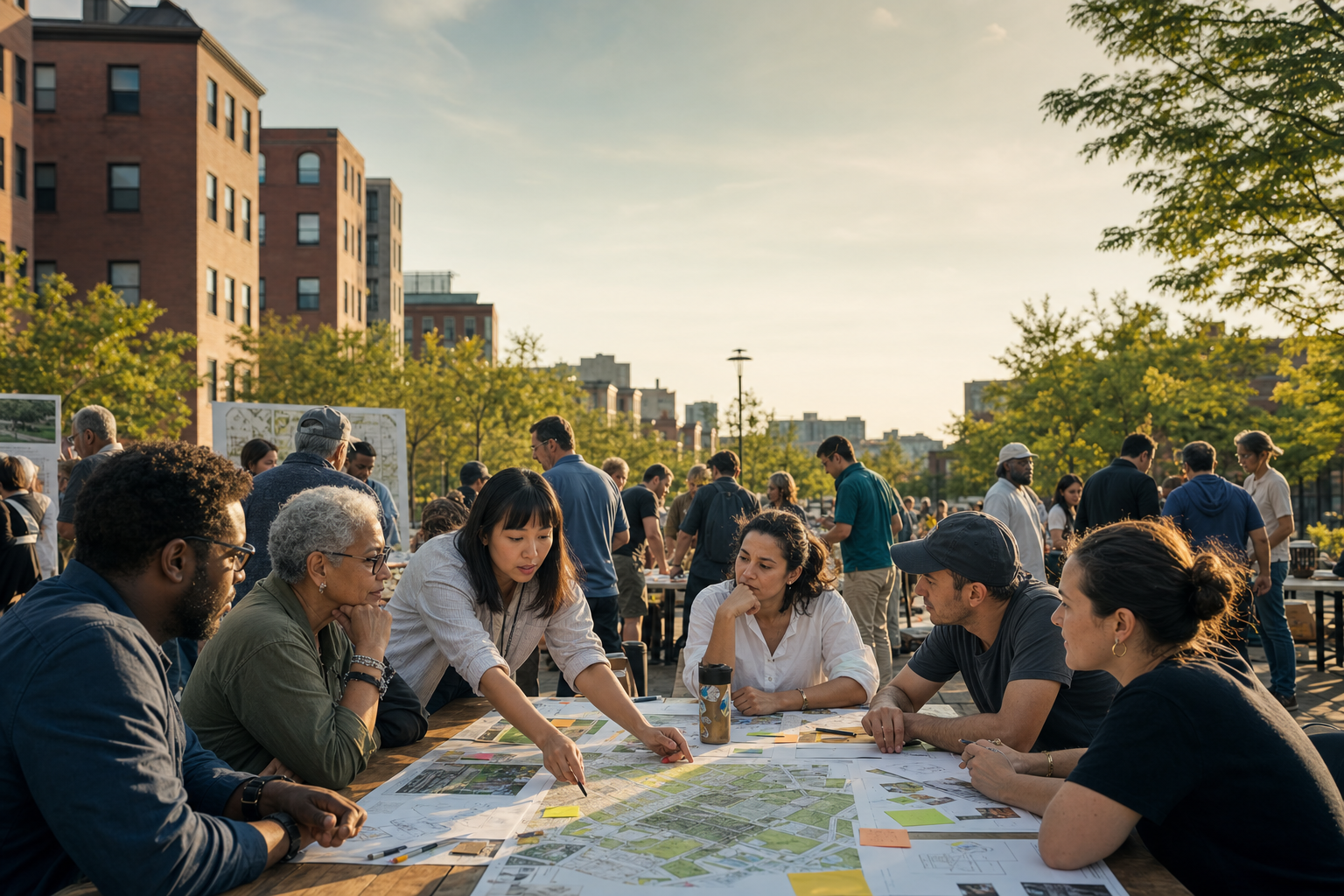
Reference methods for
community transformation
Frameworks and strategies drawn from public practice. Figures on these pages describe cited methods. They are not Character Developer client results.
Practice Categories
Stakeholder Engagement
Proven methods for meaningful community participation and collaboration
Project Management
Frameworks for managing complex community development initiatives
Sustainable Development
Environmental and social sustainability practices and methodologies
Governance & Policy
Democratic governance models and policy development frameworks
Innovation & Scaling
Strategies for scaling community innovations and social enterprises
Cultural Preservation
Methods for preserving and celebrating cultural heritage in development
All Best Practices
Participatory Budgeting Implementation Framework
A comprehensive methodology for implementing participatory budgeting processes that ensure equitable community input in public spending decisions.
This framework has been successfully implemented in over 200 cities worldwide, enabling communities to directly allocate portions of municipal budgets through democratic processes. Based on the pioneering work in Porto Alegre, Brazil, and adapted for diverse cultural and political contexts.
Core Principles
Inclusive participation across all demographic groups
Transparent decision-making processes with public accountability
Capacity building for community members and facilitators
Regular evaluation and iterative improvement
Integration with existing municipal governance structures
Community Asset Mapping and Mobilization
A systematic approach to identifying, cataloging, and mobilizing existing community assets to support local development initiatives.
Asset-based community development (ABCD) focuses on building from existing strengths rather than addressing deficits, leading to more sustainable and community-owned solutions. Developed by John McKnight and John Kretzmann at Northwestern University.
Core Principles
Focus on assets and strengths rather than deficits and needs
Recognize all forms of community capital (social, human, physical, financial, natural)
Build connections and networks between existing assets
Support community-led initiatives and local leadership
Celebrate and amplify existing community successes
Regenerative Development Model
A holistic approach to development that goes beyond sustainability to actively restore and regenerate social, economic, and environmental systems.
This model has been applied in diverse contexts from urban neighborhoods to rural communities, consistently achieving positive impacts across multiple sustainability indicators. Based on living systems principles and developed by the Regenesis Group.
Core Principles
Whole systems thinking and integration across all scales
Co-evolution of human and natural systems
Continuous learning and adaptive management
Place-based and culturally appropriate solutions
Stakeholder engagement in co-creative processes
Human-Centered Design for Community Solutions
Apply design thinking methodology to co-create solutions with community members, ensuring user needs drive innovation.
Developed by IDEO.org and adapted for community development contexts, this approach has been used in 500+ communities worldwide to design services, spaces, and programs that truly meet resident needs.
Core Principles
Empathy-driven research and deep listening to community voices
Rapid prototyping and iterative testing with real users
Co-creation workshops that include diverse community perspectives
Human-centered solutions that address root causes, not just symptoms
Sustainable implementation with community ownership and capacity building
Collective Impact Framework for Systems Change
Coordinate multiple organizations and stakeholders around a shared agenda to achieve large-scale social change.
Developed by FSG Social Impact Consultants, this framework has been applied to over 200 initiatives worldwide, achieving measurable progress on complex social issues through coordinated action.
Core Principles
Common agenda with shared measurement systems across all participants
Mutually reinforcing activities that leverage each organization's strengths
Continuous communication and trust-building among diverse stakeholders
Backbone organization providing dedicated staff and infrastructure support
Long-term commitment with sustained funding and leadership engagement
Appreciative Inquiry for Community Strengths
Focus on community assets and positive experiences to generate energy and momentum for transformative change.
Developed by David Cooperrider at Case Western Reserve University, AI has been used in thousands of communities to build on existing strengths rather than focusing on deficits.
Core Principles
Discover and appreciate what's working well in the community
Dream about possibilities based on existing strengths and successes
Design actionable strategies that build on community assets
Deploy implementation plans with broad community ownership and engagement
Positive focus that generates energy and enthusiasm for change
World Café Conversational Process
Create meaningful conversations and collective intelligence through structured small group dialogues.
Developed by Juanita Brown and David Isaacs, the World Café method has been used in thousands of gatherings worldwide to harvest collective wisdom and generate innovative solutions.
Core Principles
Create hospitable space that feels safe and inviting for authentic dialogue
Explore questions that matter to the life and work of the community
Encourage everyone's contribution through inclusive participation
Cross-pollinate ideas by connecting diverse perspectives and insights
Listen together for patterns, insights, and deeper questions that emerge
Agile Project Management for Community Initiatives
Apply agile methodology to community projects for increased flexibility, stakeholder engagement, and iterative improvement.
Adapted from software development, agile approaches have been successfully applied to community development projects, increasing success rates by 40% through iterative delivery and continuous stakeholder feedback.
Core Principles
Individuals and interactions over processes and tools
Working solutions over comprehensive documentation
Community collaboration over contract negotiation
Responding to change over following a rigid plan
Iterative delivery with regular feedback and adaptation cycles
Theory of Change Development and Application
Create clear pathways from activities to long-term impact through rigorous logic modeling and assumption testing.
Used by thousands of nonprofits and development organizations worldwide, Theory of Change provides a comprehensive framework for planning, implementing, and evaluating complex social change initiatives.
Core Principles
Backward mapping from long-term goals to identify necessary preconditions
Explicit articulation of assumptions underlying the change process
Evidence-based reasoning connecting activities to outcomes and impact
Stakeholder involvement in developing and validating the theory
Regular testing and refinement based on implementation learning
Lean Startup Methodology for Community Ventures
Apply build-measure-learn cycles to community initiatives for rapid validation and resource-efficient development.
Adapted from Eric Ries' Lean Startup methodology, this approach has been used by hundreds of community organizations to test and scale social innovations with minimal waste and maximum learning.
Core Principles
Build minimum viable programs (MVPs) to test core assumptions quickly
Measure impact and engagement through validated learning approaches
Learn from data and community feedback to inform next iteration
Pivot or persevere based on evidence rather than assumptions
Continuous experimentation and rapid iteration cycles
Results-Based Accountability Framework
Focus on outcomes and results rather than activities, with clear accountability for population-level change.
Developed by Mark Friedman and used by governments and nonprofits worldwide, RBA provides a disciplined way of thinking and taking action to improve quality of life for communities.
Core Principles
Focus on results (population outcomes) rather than just program performance
Use data to drive decision-making and resource allocation
Work backward from desired outcomes to identify effective strategies
Engage partners in collective accountability for population-level results
Regular performance measurement and course correction
Community Resilience Planning Framework
Build community capacity to prepare for, respond to, and recover from social, economic, and environmental challenges.
Developed by resilience practitioners and used in hundreds of communities worldwide, this framework helps communities build adaptive capacity and thrive in the face of uncertainty and change.
Core Principles
Assess community vulnerabilities and existing adaptive capacities
Build social cohesion and networks that support collective action
Diversify economic base and strengthen local resource flows
Develop infrastructure and systems that can adapt to changing conditions
Foster learning culture and continuous adaptation capabilities
Circular Economy Principles for Communities
Apply circular economy principles to create regenerative local economic systems that eliminate waste and maximize resource efficiency.
Based on Ellen MacArthur Foundation principles and implemented in hundreds of communities worldwide, circular economy approaches create economic value while reducing environmental impact.
Core Principles
Design out waste and pollution through systems thinking
Keep products and materials in use through sharing, repair, and reuse
Regenerate natural systems through restorative practices
Create local economic loops that retain value in the community
Foster innovation and collaboration across sectors
Transition Towns Community Resilience Model
Build community resilience and sustainability through local food systems, energy independence, and economic relocalization.
Started by Rob Hopkins in Totnes, UK, the Transition Towns movement has spread to over 1,000 communities worldwide, creating practical pathways to sustainability and resilience.
Core Principles
Build local resilience through community-led sustainability initiatives
Relocalize economy through local food, energy, and currency systems
Develop practical skills and knowledge for sustainable living
Create positive vision of sustainable future that inspires action
Foster collaboration and community ownership of transition process
Biomimicry for Community System Design
Apply nature's strategies and principles to design sustainable community systems and solve local challenges.
Based on Janine Benyus' biomimicry methodology and applied in diverse community contexts, this approach creates innovative solutions inspired by 3.8 billion years of natural evolution.
Core Principles
Study nature's models and emulate these forms, processes, and systems
Use ecological standards to judge sustainability of innovations
View nature as mentor rather than something to exploit
Apply systems thinking to understand interconnections and relationships
Design solutions that are life-friendly and regenerative
Permaculture Design for Community Systems
Apply permaculture principles to design sustainable community systems that work with natural patterns and cycles.
Developed by Bill Mollison and David Holmgren, permaculture design has been applied in thousands of communities worldwide to create sustainable food, energy, and social systems.
Core Principles
Care for the earth through regenerative practices and ecological design
Care for people through meeting human needs sustainably and equitably
Fair share through limiting consumption and redistributing surplus
Work with natural patterns and cycles rather than against them
Design for multiple functions and beneficial relationships
Participatory Democracy Implementation Models
Implement democratic governance models that meaningfully engage citizens in decision-making processes.
Based on successful implementations in cities like Porto Alegre, Reykjavik, and Barcelona, these models have demonstrated significant improvements in democratic participation and governance outcomes.
Core Principles
Direct citizen participation in policy development and decision-making
Transparent and accessible democratic processes for all community members
Deliberative dialogue that promotes informed and thoughtful decision-making
Accountability mechanisms that ensure responsiveness to citizen input
Continuous learning and improvement of democratic processes
Community Land Trust Development Model
Create community-controlled land ownership models that ensure permanent affordability and community benefit.
With over 280 CLTs in the US and growing internationally, this model has proven effective at maintaining affordable housing and community assets while building community wealth and control.
Core Principles
Community ownership and democratic control of land and assets
Permanent affordability through deed restrictions and resale formulas
Stewardship of land for community benefit rather than speculation
Resident leadership and capacity building for self-governance
Balancing individual homeownership with community land ownership
Community-Based Restorative Justice Programs
Implement restorative justice approaches that heal harm and strengthen community relationships.
Used in hundreds of communities worldwide, restorative justice programs have demonstrated significant success in reducing recidivism, healing trauma, and building community capacity for conflict resolution.
Core Principles
Focus on healing harm rather than punishment
Include all stakeholders affected by harm in the resolution process
Address root causes and underlying community conditions
Build community capacity for preventing and responding to harm
Emphasize accountability, responsibility, and making amends
Community Policy Advocacy and Organizing
Build community power and capacity to advocate for policy changes that address root causes of community challenges.
Based on organizing models developed by Saul Alinsky and refined by organizations like IAF and PICO, these approaches have achieved significant policy victories in thousands of communities.
Core Principles
Build broad-based community power through relationship building and organizing
Focus on winnable issues that address root causes of community problems
Develop community leadership and capacity for sustained advocacy
Use research and data to support policy positions and advocacy strategies
Create accountability relationships with elected officials and decision-makers
Social Innovation Labs for Systems Change
Create collaborative spaces for experimenting with innovative solutions to complex social challenges.
Developed by organizations like MaRS Solutions Lab and Nesta, social innovation labs have been established in dozens of cities worldwide to tackle complex challenges through collaborative innovation.
Core Principles
Bring together diverse stakeholders to collaborate on complex challenges
Use human-centered design and systems thinking to understand problems deeply
Prototype and test innovative solutions through rapid experimentation
Build capacity for ongoing innovation and systems change
Scale successful innovations through networks and partnerships
Community Impact Investing and Finance
Develop innovative financing mechanisms that generate both financial returns and positive social impact.
The global impact investing market has grown to over $715 billion, with community-focused investments showing strong returns while addressing local challenges and building community wealth.
Core Principles
Generate measurable social and environmental impact alongside financial returns
Align investment strategies with community priorities and values
Build local wealth and ownership through community-controlled investment
Use patient capital and flexible financing to support community development
Measure and report on both financial and social returns
Social Enterprise Development and Scaling
Create and scale businesses that generate revenue while addressing social and environmental challenges.
Social enterprises worldwide generate over $2 trillion in revenue while addressing critical social challenges, with successful models demonstrating both financial sustainability and significant social impact.
Core Principles
Create sustainable business models that address social or environmental problems
Measure and optimize for both financial performance and social impact
Engage stakeholders and beneficiaries in enterprise development and governance
Build organizational capacity for both business operations and social mission
Scale impact through replication, partnerships, and systems change
Cultural Asset Mapping and Preservation
Identify, document, and preserve community cultural assets while supporting their continued vitality and evolution.
Used by UNESCO and cultural organizations worldwide, cultural asset mapping has helped hundreds of communities preserve and revitalize their cultural heritage while supporting economic development.
Core Principles
Comprehensive identification and documentation of tangible and intangible cultural assets
Community-led process that honors local knowledge and cultural protocols
Integration of cultural preservation with economic development opportunities
Intergenerational knowledge transfer and cultural continuity
Respectful sharing and celebration of cultural assets with broader community
Indigenous Knowledge Systems Integration
Respectfully integrate indigenous knowledge systems into community development while supporting indigenous sovereignty and self-determination.
Based on principles developed by indigenous communities and organizations worldwide, this approach honors traditional knowledge while supporting contemporary community development needs.
Core Principles
Respect indigenous sovereignty and self-determination in all processes
Honor traditional knowledge systems and cultural protocols
Ensure indigenous communities control their knowledge and cultural assets
Integrate traditional and contemporary knowledge systems respectfully
Support indigenous leadership and capacity building
Share Your Best Practice
Help our community learn from your successful methodologies and proven approaches.